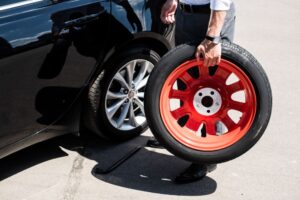
The search for reliable automotive spare parts Singapore begins not with catalogues or price lists but with a fundamental question: what does it mean to keep a machine alive? In medicine, we speak of maintenance and repair, of replacing worn tissues and failing organs. The automobile, that most intimate of mechanical companions, demands similar care. Its parts wear, fail, and require replacement according to patterns as predictable as cellular aging, yet the choices we make about those replacements carry consequences that ripple through years of ownership and thousands of kilometres of travel.
The Biology of Mechanical Failure
Every component in a vehicle possesses what we might call a natural lifespan, a period during which it performs its designated function before succumbing to the accumulated insults of friction, heat, chemical degradation, and mechanical stress. Brake pads wear away molecule by molecule. Engine oil loses its protective properties as its molecular chains break down. Rubber seals harden and crack as UV radiation attacks their polymer bonds.
In Singapore’s climate, these processes accelerate. The constant heat and humidity function like a fever in the body, speeding every chemical reaction and hastening decay. Brake fluid designed to last three years in temperate zones might absorb enough moisture in eighteen months here to compromise performance. The automotive spare parts Singapore market has evolved to account for these realities, stocking components engineered for tropical conditions.
The Land Transport Authority recognises these environmental stresses in its guidance, stating that “vehicle owners must ensure their vehicles are maintained in a roadworthy condition, with particular attention to components subject to wear and environmental degradation.” This regulatory acknowledgment transforms spare parts selection from preference into legal obligation.
The Diagnostic Challenge
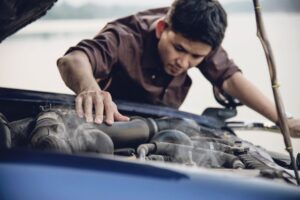
Diagnosing mechanical failure resembles medical diagnosis in its complexity. Symptoms manifest, but causes often remain obscure. A vehicle vibrates; is the problem in the tyres, suspension, or drivetrain? An engine consumes excessive oil; is the issue piston rings, valve seals, or gasket failure?
The quality of automotive spare parts Singapore suppliers choose to stock directly influences these diagnostic puzzles. Inferior components create cascading failures where one substandard part damages others. A failing water pump damages a thermostat. A clogged fuel filter strains an injection pump. A worn serpentine belt allows an alternator to underperform, stressing a battery that fails prematurely.
Critical factors in spare parts selection include:
- Material composition suited to tropical degradation patterns
- Manufacturing tolerances that ensure proper fit and function
- Design features that account for local operating conditions
- Quality control processes that reduce variation between individual components
- Documentation that enables verification of authenticity and specifications
The Counterfeit Pathology
In medicine, we fear the counterfeit drug that appears genuine but lacks active ingredients. The automotive world harbours analogous threats. Counterfeit brake pads containing compressed organic matter instead of proper friction materials. Oil filters lacking filtration media. Suspension components cast from inferior alloys that fracture under stress.
These components pass superficial inspection. Yet they carry within them the seeds of catastrophic failure, waiting for maximum stress to reveal their inadequacy. Singapore Customs works to intercept these dangerous imposters, but verification responsibility ultimately falls on vehicle owners and the automotive spare parts Singapore suppliers they trust.
The Economics of Longevity
In Singapore, where vehicle ownership costs exceed those in nearly any other nation, maintenance economics take on profound importance. A Certificate of Entitlement alone can cost more than an entire vehicle would elsewhere. This creates a peculiar calculation: how much should one invest in maintaining an asset that faces a ten-year lifespan limit?
The temptation toward economy in spare parts selection becomes overwhelming. Yet this is where the medical analogy proves most instructive. Cheap medications that fail to treat disease cost more long-term than effective ones. Similarly, substandard automotive components create expenses that dwarf initial savings.
Consider the cascade:
- Inferior brake pads wear quickly and damage rotors, requiring rotor replacement
- Cheap oil filters allow contaminants to circulate, accelerating engine wear
- Substandard spark plugs cause incomplete combustion, damaging catalytic converters
- Poor-quality bearings fail prematurely, potentially causing accident or breakdown
The skilled automotive spare parts Singapore supplier understands these economic realities and guides customers toward choices that minimise total cost of ownership rather than offering the lowest initial price.
The Question of Provenance
Just as we inquire about the source of our food and medications, so too must we question where automotive spare parts originate. The global supply chain delivers components from dozens of countries, each with different manufacturing standards. A part bearing a familiar brand name might be manufactured under license in facilities with varying commitment to specification compliance.
Reputable suppliers maintain traceability systems that document component origins, manufacturing dates, and distribution pathways. They establish relationships with authorised distributors rather than grey market intermediaries. They invest in staff training that enables authentication of questionable items.
The Path Forward
The intersection of regulatory requirement, environmental stress, economic pressure, and safety concern creates a decision space of remarkable complexity. Vehicle owners navigate this space with varying degrees of success, relying on relationships with mechanics and suppliers who have earned trust through consistent performance.
The choice of where to source spare parts resembles the choice of a physician: it requires attention to credentials, reputation, and demonstrated competence. It demands communication and mutual understanding. It benefits from continuity and accumulated knowledge of a vehicle’s particular history.
In the end, the market for automotive spare parts Singapore functions best when all participants understand they are engaged not in simple transactions but in the ongoing project of keeping complex machines functioning safely in one of the world’s most demanding automotive environments.